NBA Prop Bet Line Movement: How to Read What Shifting Odds Are Telling You
 Available in US
Line Movement Is the Market Talking — Here’s How to Listen
Last December I noticed a points prop line move from 24.5 to 22.5 in the space of 90 minutes, with no injury report to explain it. The player was healthy, the matchup was unchanged, and the game total had not moved. Something was happening beneath the surface that the line was reflecting before any news outlet picked it up. Two hours later, the team announced a minutes restriction — a minor knee issue that had not appeared on the official report. The line had moved first. The news came second.
Line movement on NBA player props is a signal, not noise. When a line shifts, it is because money has moved it — either sharp action from professional bettors, new information entering the market, or the bookmaker’s own model recalibrating. AI-driven prop analysis platforms are now part of this ecosystem, processing patterns that human bettors miss and driving early-line movement that was not possible five years ago. Reading that movement correctly gives you an informational edge that supplements your own analysis.
Three Reasons NBA Prop Lines Move Before Tip-Off
The first and most common reason is sharp money. Professional bettors — the sharps — hit lines early, often within minutes of their initial posting. They have sophisticated models, rapid data processing, and the discipline to act on a perceived edge before the public discovers it. When a sharp bettor places a significant wager on a prop over, the bookmaker moves the line to balance his exposure. If you see a line move from 22.5 to 23.5 without any news context, sharp money is the most likely explanation.
The significance of that movement depends on the direction. If the sharp money pushes the over, the line moves up, making the over harder to hit but also signalling that informed bettors believe the original line was too low. If I agree with the directional thesis — based on my own analysis — I might still take the over at the new number, knowing that the edge is smaller but the confirmation from sharp action increases my confidence. If the movement pushes the line beyond my projected output, I pass.
The second reason is new information. Injury updates, lineup changes, and coaching decisions can move a prop line instantly. A star player listed as questionable in the morning who is confirmed active by afternoon might see his line jump by 1-2 points as the uncertainty premium is removed. A teammate ruled out at the last minute can shift the line for multiple players on the same team — the cascade effect at work in real time.
FanDuel and DraftKings together control roughly 75% of the US sports betting market by handle, and their line movements ripple across the global market. When a US bookmaker moves a prop line, UK bookmakers often follow within minutes — not because they are copying, but because the same information (sharp action, injury news) reaches all operators through the shared data ecosystem. If you see a UK line that has not yet moved to match a US adjustment, the window of opportunity is small but real.
The third reason is model recalibration. Bookmakers update their prop models throughout the day as new data becomes available — updated pace projections, revised lineup information, late changes to the game total. These recalibrations produce smaller, more gradual movements than sharp money or injury news, but they accumulate. A line that opened at 22.5 and sits at 23.0 by tip-off might have moved 0.5 points through a series of small model updates, none of which individually seemed significant.
How to Track and Interpret Prop Line Shifts on UK Sites
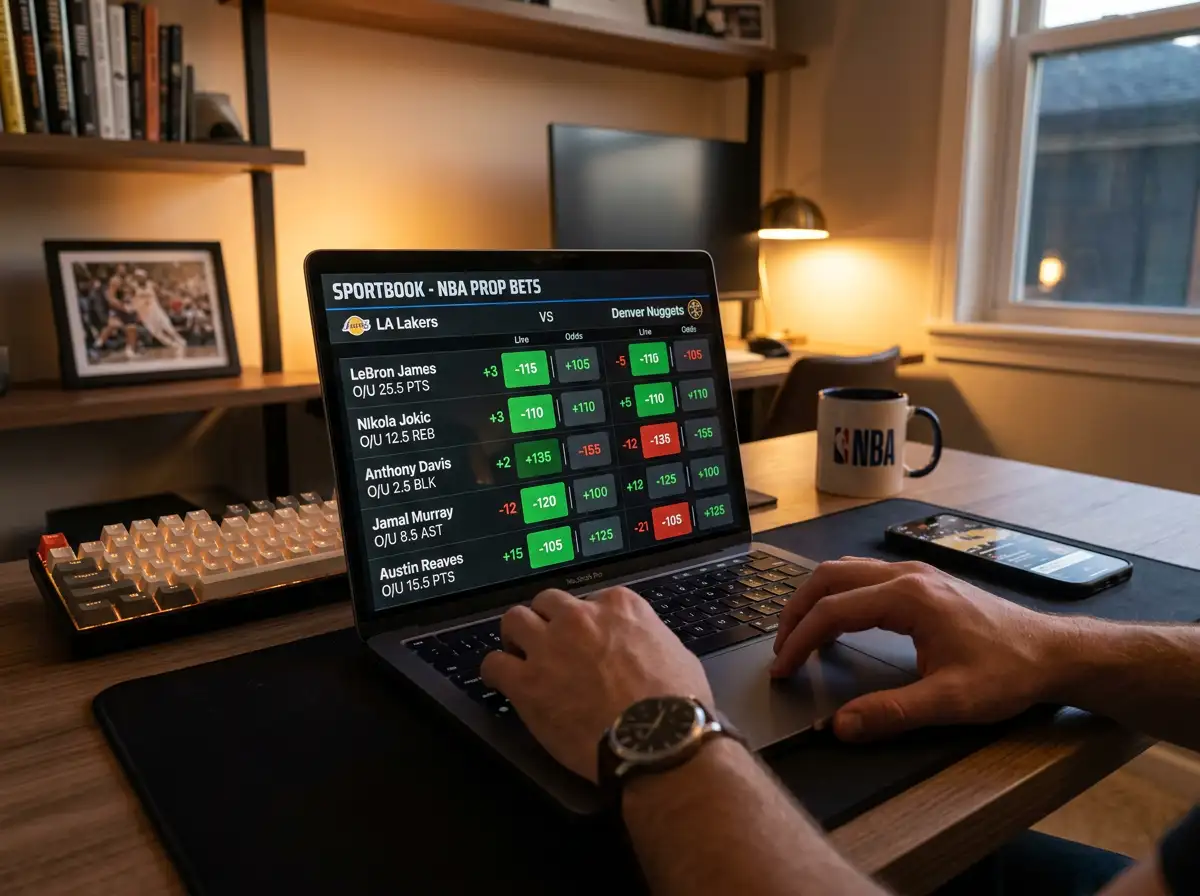
Tracking line movement on UK bookmakers requires checking lines at specific intervals — I check at three points during the day: when the lines first post (usually early afternoon for evening NBA games), mid-afternoon, and 90 minutes before tip-off. The first check establishes my baseline. The second reveals early sharp action and any injury-driven movement. The third captures the final adjustments before the market closes.
Not every movement is actionable. A 0.5-point shift on a points prop within the normal pricing band (22.5 to 23.0) might reflect routine model updating rather than meaningful information. I look for movement of 1.0 point or more, or movement that contradicts the available public information — those are the signals worth investigating. If a line moves 1.5 points down with no injury news, I immediately check secondary sources: team beat reporters, player tracking accounts, and injury aggregation services. The information driving the move exists somewhere; my job is to find it before the market fully adjusts.
There is a temptation to follow every line move blindly — “the sharps moved it, so I should bet the same direction.” That approach can work over small samples, but it ignores the critical question: has the move already captured the edge? If the sharps bet the over at 22.5 and the line is now 23.5, the value that existed at 22.5 might be fully absorbed into the new number. You are not the sharp who moved the line — you are the retail bettor who arrived after the move. Unless your own analysis supports the bet at the new line, following the move is just copying someone else’s work at a worse price.
My most profitable line movement strategy is contrarian: I look for lines that have moved in one direction due to public money rather than sharp money, and I bet the other side. Public money tends to favour overs and star players, which pushes lines upward without genuine informational content. When a star’s line moves from 25.5 to 26.5 purely because recreational bettors are piling on the over, the under at 26.5 can offer value that did not exist at the original number. Distinguishing public movement from sharp movement is the key skill, and it develops through repeated observation — watching which movements reverse before tip-off (public money, corrected by the bookmaker) and which hold firm (sharp money, reflecting genuine information).
Line movement analysis pairs naturally with the broader strategic framework I use for all prop bets. It is not a standalone method — it is a confirmation tool that strengthens or weakens the case your matchup analysis has already built. When my analysis says “over” and the line is moving up on sharp action, I am more confident. When my analysis says “over” and the line is drifting down, I dig deeper before committing. That combination of independent analysis and market signal interpretation is the core of how I approach every prop bet I place.
What causes NBA prop lines to move before a game?
Three primary factors drive pre-game line movement: sharp money from professional bettors who act on modelled edges shortly after lines are posted, new information such as injury updates or lineup changes, and routine recalibration of the bookmaker’s model as updated data becomes available throughout the day. Movements of 1.0 point or more typically reflect sharp action or significant news, while smaller shifts often result from model updates.
Should I bet early or wait for line movement on NBA props?
It depends on your analysis and the type of edge you are seeking. Betting early captures the opening line, which is often less efficient than the closing line — but only if your analysis identifies value at that price. Waiting for movement gives you more information but risks the line moving away from your preferred side. My approach is to identify the line I want, check it at the opening, and bet early if the value is there. If the line has already moved past my target, I either wait for a correction or pass on the play entirely.
Created by the ”nba Player Prop bet” editorial team.