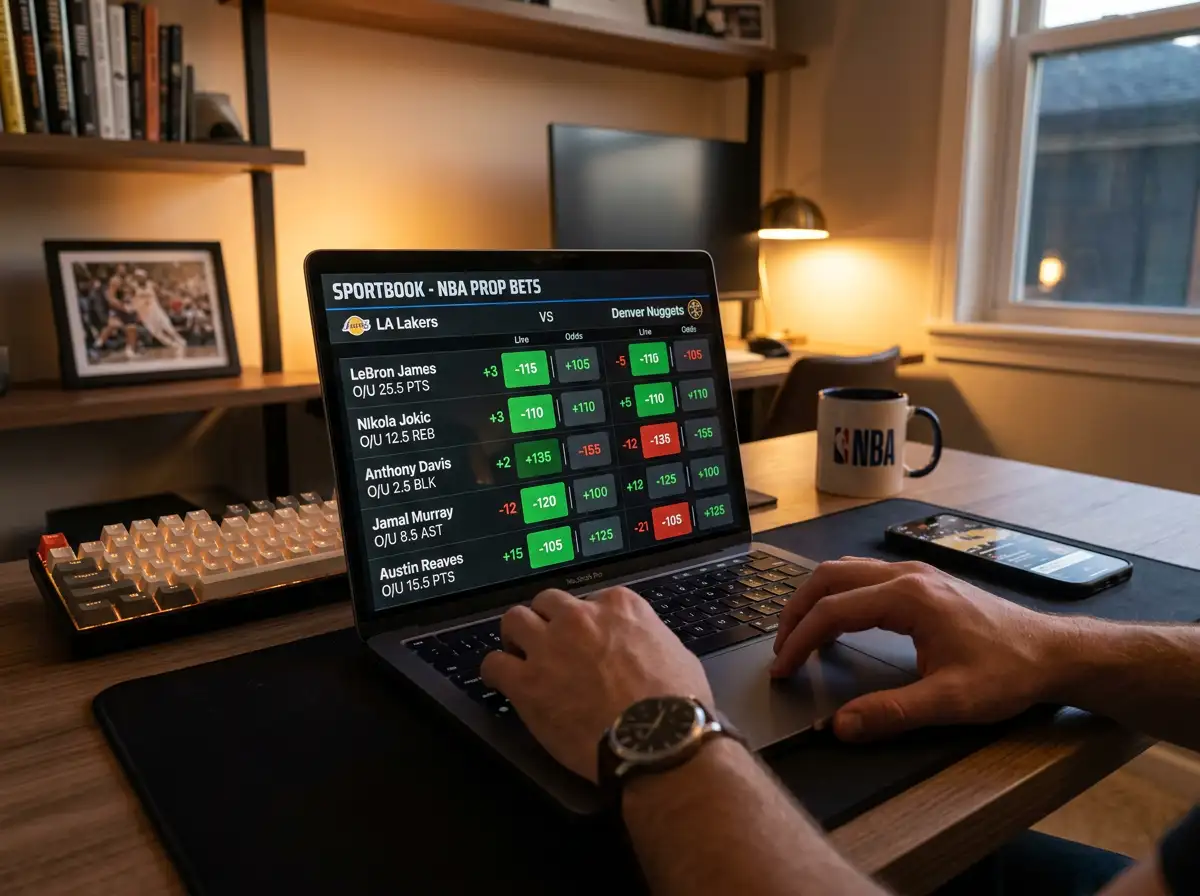
NBA Trade Deadline and Prop Markets: How Mid-Season Moves Reshape Every Line
 Available in US
February’s Forty-Eight Hours of Chaos
The NBA trade deadline lands in February, and for two days every season the prop market becomes a completely different animal. Players switch teams, rotations implode, usage patterns scramble, and the bookmaker’s model — which has spent four months calibrating lines based on stable rosters — suddenly has to start over for every player touched by a trade. I have come to view deadline week as the single most profitable window in my entire prop betting calendar, and I prepare for it the way a trader prepares for earnings season: research in advance, execute quickly, and accept that the edge is fleeting.
The 2024-25 deadline was a masterclass in prop market disruption. Multiple high-profile trades sent players to new teams with different pace ratings, different offensive systems, and different usage hierarchies. Within hours, the prop lines for the traded players and their new and former teammates were all mispriced — some dramatically so. The bookmakers needed 3-5 games of data in the new context to recalibrate, and during that window the informed bettor had a structural advantage.
How Trades Disrupt Prop Lines on Both Ends
When a player is traded, the prop market disruption is bilateral. On the acquiring team, the new player absorbs minutes and usage that previously belonged to other players. On the departing team, those minutes and that usage redistribute among the remaining roster. Both sides of the trade create mispricing, and in my experience the departing-team mispricing is often larger because the market focuses its attention on the traded player rather than the players left behind.
Consider a concrete scenario. A team trades its starting power forward who averaged 18 points, 8 rebounds, and 3 assists. On the old team, those 18 points per game must come from somewhere — the remaining players’ usage rates increase, the backup power forward’s minutes jump, and the point guard’s assist opportunities change because the personnel around him have shifted. The prop lines for those remaining players are still anchored to the pre-trade data, which included four months of a roster configuration that no longer exists. For 3-5 games after the trade, every prop line on that team is stale.
On the acquiring team, the new player arrives with prop lines set by his old context. If he moves from a slow-paced team to a fast-paced team, his raw counting stats are likely to increase simply from more possessions per game. If he moves from being the second option to the third option, his usage and scoring will decline even if his talent is unchanged. The market needs time to integrate the new context, and the adjustment lag is where the value lives.
NBA betting accounts for approximately 60% of the $8.7 billion global basketball wagering market, and trade deadline volume spikes are well-documented. The increased handle around deadline day is driven partly by recreational interest in new player combinations and partly by sharp bettors who recognise the inefficiency window. The bookmakers know they are vulnerable during this period — several operators have told me informally that they reduce their maximum bet sizes on affected player props for the first few post-trade games to limit their exposure.
Pre-Deadline Preparation and Post-Deadline Execution
I start my deadline preparation in January. I build a watchlist of players who are rumoured to be available — the trade market is not a surprise; the reporting ecosystem in the NBA is the most transparent of any major sport, and most significant trades are telegraphed weeks in advance. For each player on my watchlist, I pre-calculate the prop implications for both the acquiring and departing teams.
The key metrics I prepare in advance are pace differential, usage hierarchy, and minutes projection. If a player currently plays on a team that averages 96 possessions per game and is traded to a team that averages 102, that six-possession difference translates directly into higher counting stats. I estimate the stat inflation per possession gained and compare it to where I expect the post-trade prop line to open. If the gap between my projection and the likely opening line is more than 3%, I flag it as an actionable trade.
Execution speed matters. The first post-trade prop lines are often posted within hours of the trade being officially announced, and the sharpest bettors in the market are placing bets within minutes. I do not try to be the fastest — my pre-deadline preparation ensures I have a view on the trade’s prop implications before the line is posted, so I can evaluate the opening number against my projection immediately rather than scrambling to build an analysis from scratch.
The departure side is where I find the most consistent value. When a team’s leading scorer is traded, his former teammates’ prop lines often remain unchanged for the first game — the bookmaker’s model has not yet integrated the trade into its projections. The remaining players will absorb 15-20 additional shot attempts per game as a group, and the individual beneficiaries are predictable: the next-highest-usage player on the roster sees the largest increase. Betting the over on that player’s points line for the first 2-3 post-trade games has been one of my most reliable deadline strategies.
The Buyout Market and Late-Season Additions
The trade deadline is not the only roster-disruption event in February and March. After the deadline passes, teams that acquired extra players sometimes waive veterans who do not fit, and those veterans enter the buyout market — signing with contending teams for the playoff push. Buyout signings create smaller but still meaningful prop disruptions, particularly for the player being replaced in the rotation.
A contender that adds a veteran scorer through the buyout market is sending a message about its rotation. The player currently occupying those minutes — often a younger player or a bench veteran — is about to see his role shrink. His prop lines will not adjust until the new player has been integrated, which can take a week or more of practice and a few games of the coach experimenting with combinations. During that adjustment period, the under on the displaced player’s props can offer value, because his minutes are quietly being redirected.
Flutter Entertainment — parent company of several major UK-facing operators — reported $15.91 billion in group revenue for 2025, a 17% increase that reflects the growing sophistication and scale of the market. A meaningful portion of that growth comes from the increased handle around NBA roster transaction periods, where the combination of media attention and market inefficiency drives higher engagement from both recreational and sharp bettors. For UK punters following the NBA, understanding how absences reshape teammate lines provides the analytical foundation for capitalising on trade deadline disruption — the mechanism is the same, whether the absence is caused by injury or by a trade.
How long does it take for NBA prop lines to adjust after a trade?
Bookmakers typically need 3-5 games of post-trade data to fully recalibrate prop lines for affected players. The initial post-trade lines are often anchored to pre-trade performance data and do not fully account for changes in pace, usage hierarchy, or minutes distribution on both the acquiring and departing teams. The mispricing window is largest in the first 1-3 games and narrows as more data becomes available.
Should I focus on traded players or their former teammates for prop bets?
Both sides offer value, but the departing-team mispricing is often larger and more overlooked. When a team’s leading scorer is traded, the remaining players absorb additional shot attempts and usage, but their prop lines may not adjust for several games. The over on the next-highest-usage player’s points or scoring prop has been a consistently profitable post-deadline strategy in my tracking.
Written by the editors at nba Player Prop bet.